Ola Campus
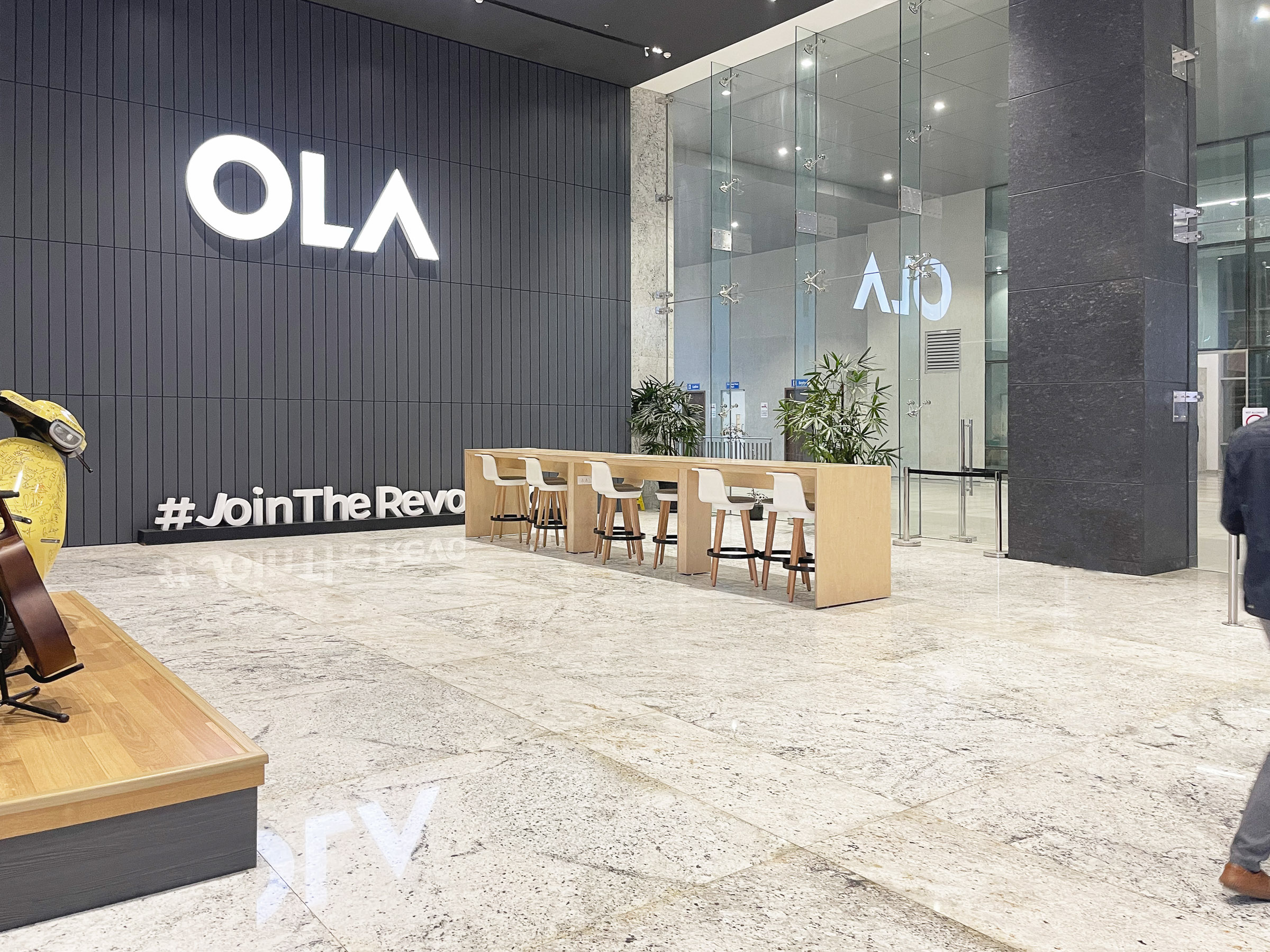
OLA Campus is the headquarters of India’s largest mobility platform and electric vehicle manufacturer, designed by Beyond Design as a new model for contemporary corporate workspace in central Bengaluru. The eight-storey campus brings together OLA’s diverse business verticals under one roof, supporting operations across more than 250 cities in India, Australia, New Zealand and the UK.
Beyond Design developed a spatial strategy that zones the building to provide a dedicated floor for each business, while carefully curated shared spaces create moments of overlap and collaboration between teams. Key communal areas including amphitheatre-style stairs, presentation spaces and a library are integral to the campus, supporting everyday interaction as well as larger gatherings, events and product launches. Together, these spaces foster exchange, innovation and a shared organisational culture, contributing to the dynamic energy of the campus.
Size
280,000 sqft
Location
Bengaluru, India
Status
Completed
Category
working
The design of the OLA Campus was conceived as a flexible and collaborative workplace environment that supports growth, interaction and adaptability. Located in central Bengaluru, the project brings together OLA’s diverse business functions within a single spatial framework, balancing efficiency with openness. The design establishes a clear architectural order while allowing for variation and informality across the campus.
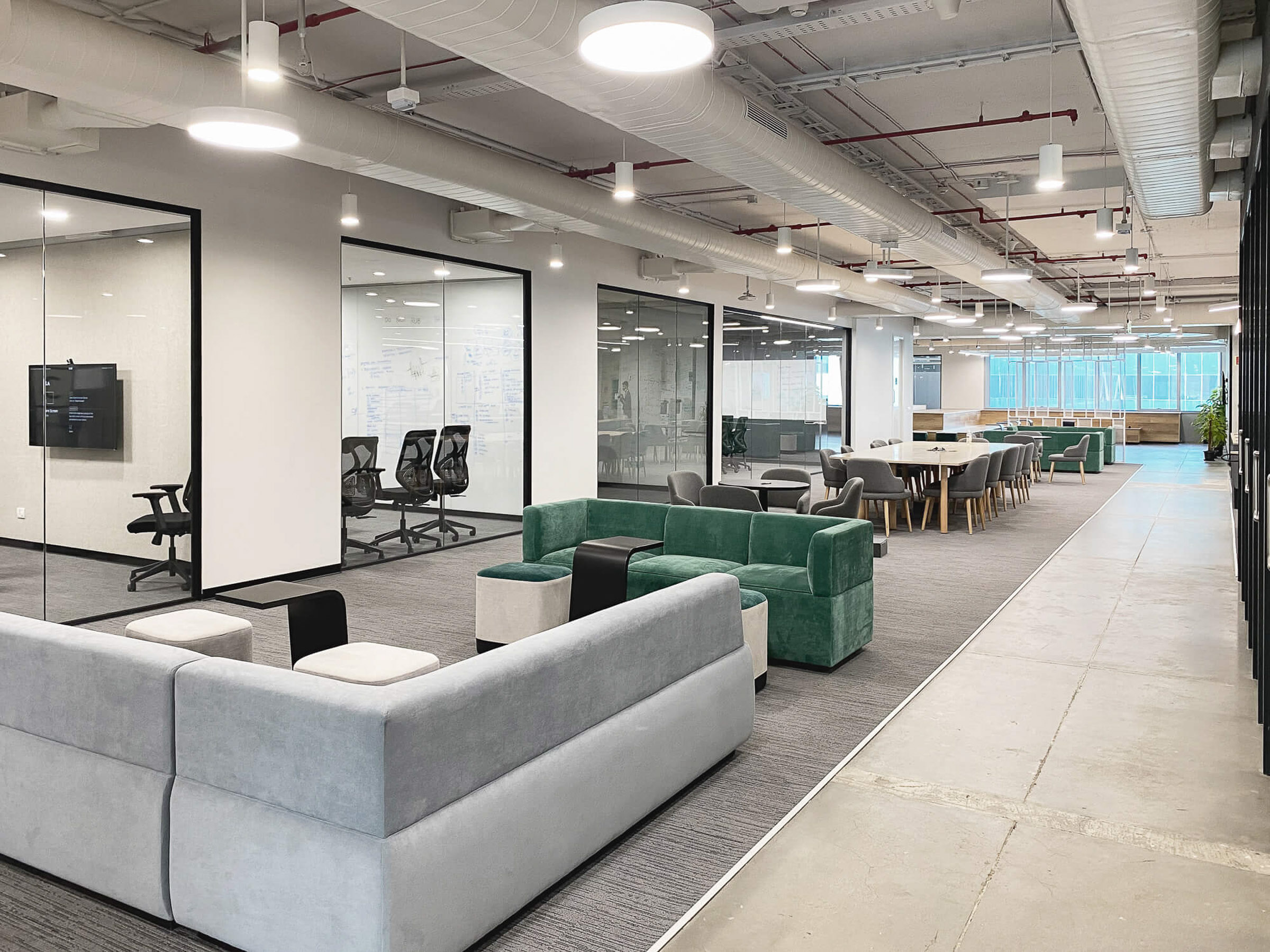
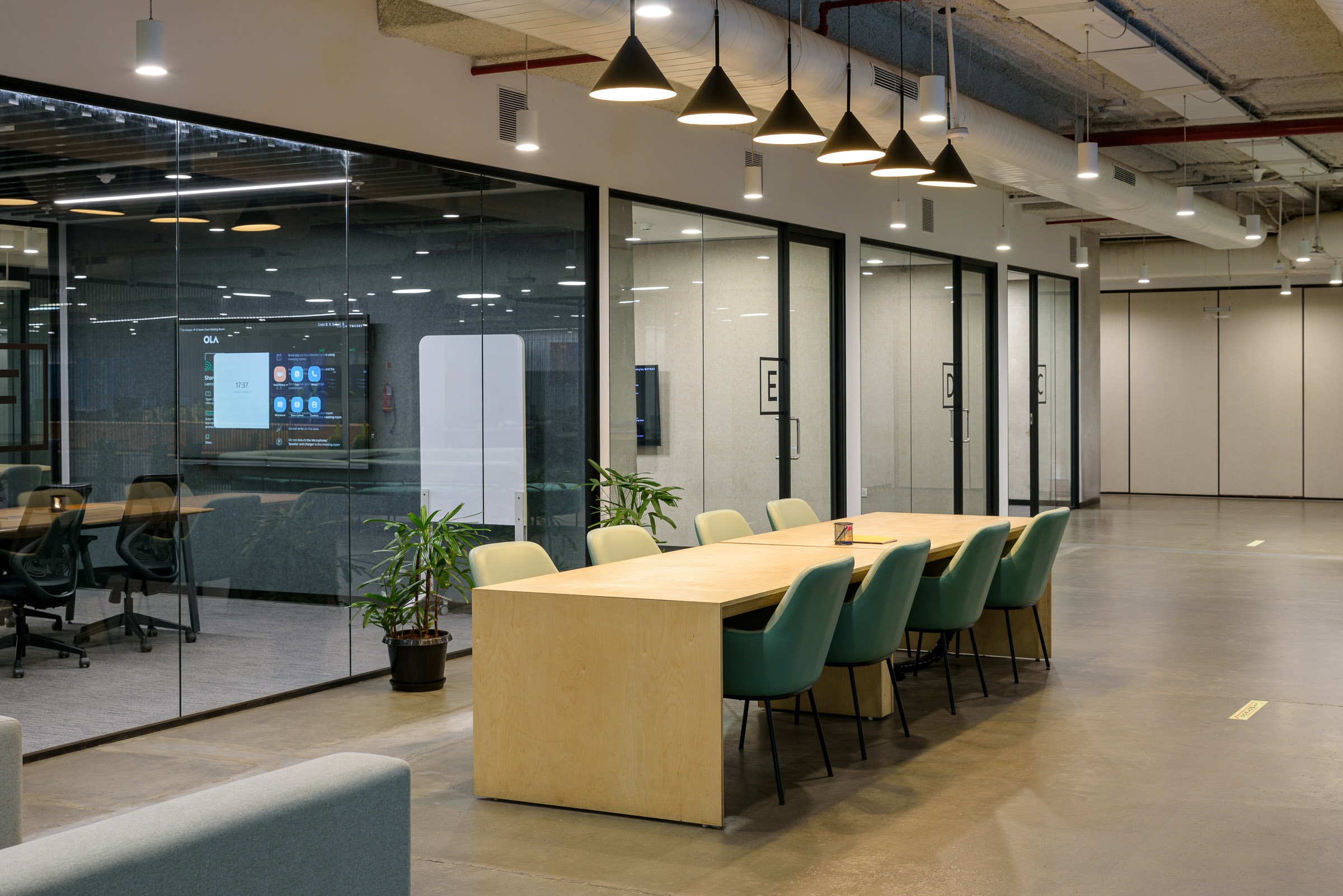
The L-shaped floor plate is organised around a central lift and stair core, which is reimagined as the social heart of each level. Rather than functioning solely as a circulation element, the core is activated through a series of informal spaces that promote movement, visibility and chance encounters. This layered approach creates a continuous backdrop for interaction and exchange throughout the building.
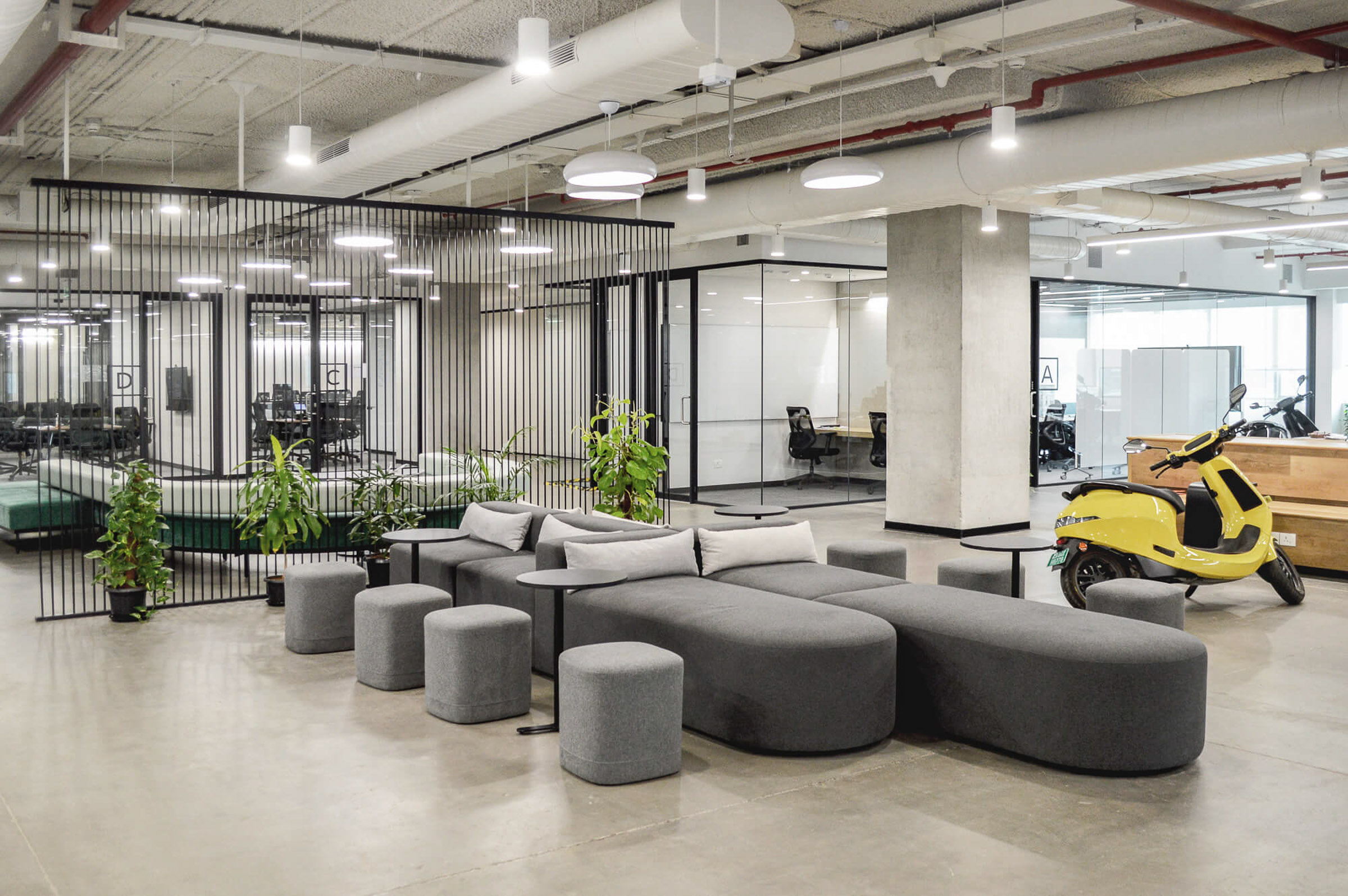
Wrapped around this central zone, the remaining floor area is composed of open-plan workstations, enclosed meeting rooms and smaller breakout spaces. The arrangement supports a range of working styles, enabling teams to transition easily between focused and collaborative modes of work. Visual connections across the floor plate reinforce openness and contribute to a sense of shared occupation.
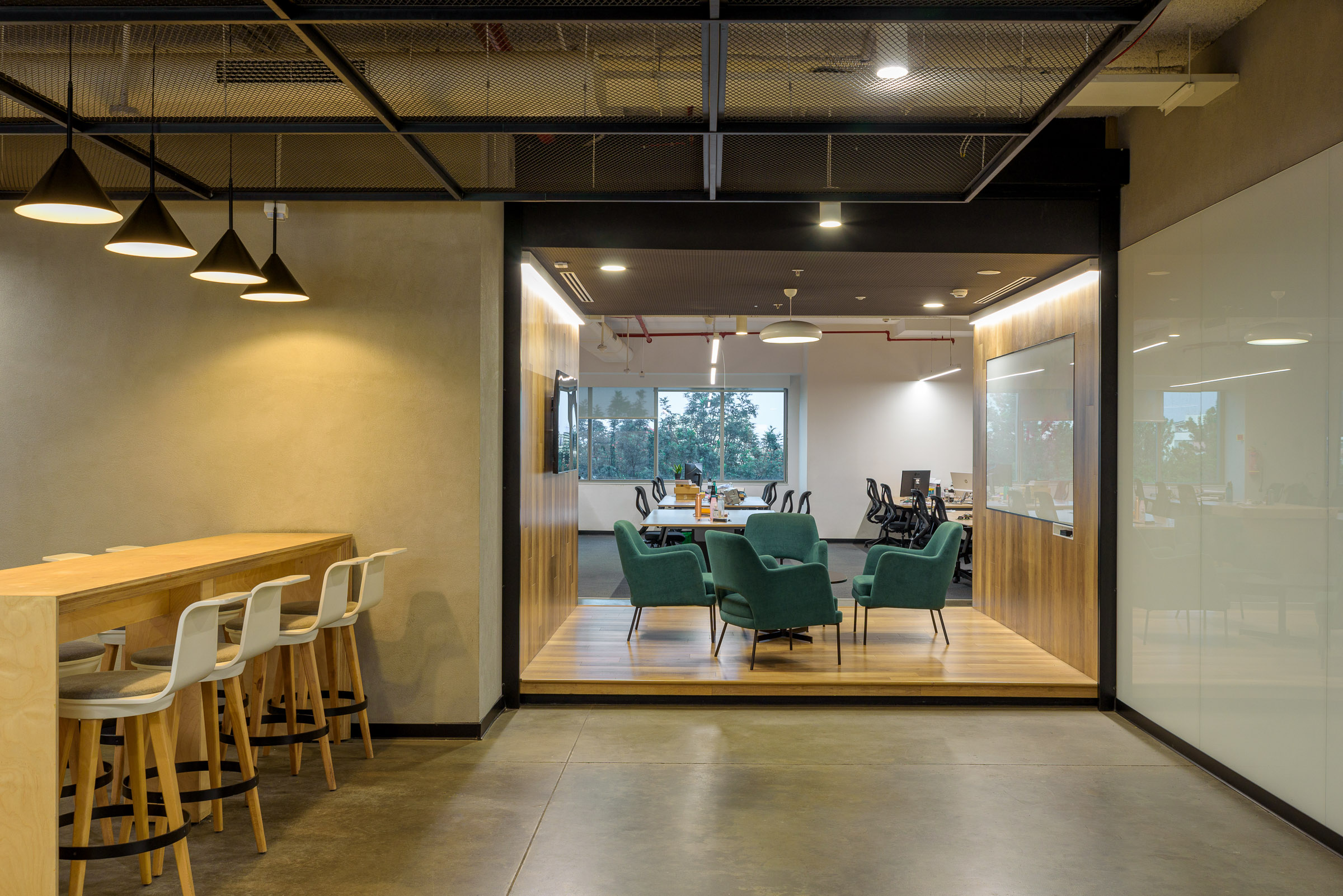
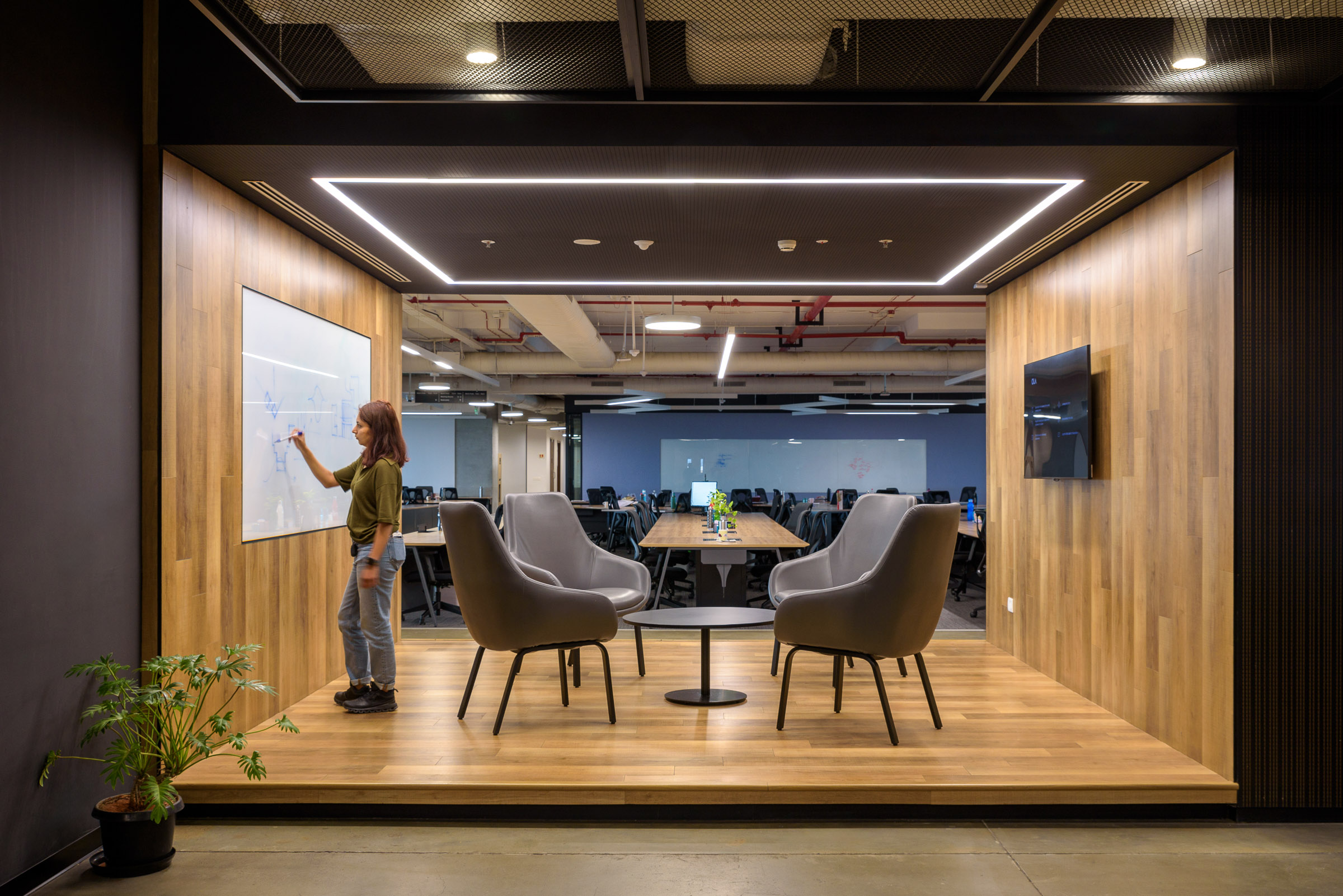
Spatial flows and adjacencies were carefully developed in response to a detailed understanding of the client’s organisational structure and operational needs. Circulation routes are intuitive and legible, allowing the workplace to function efficiently at scale while maintaining a sense of permeability and connection. This clarity supports everyday use and contributes to the overall vibrancy of the campus.
OLA’s brand identity and ethos were closely studied and translated into a confident architectural and interior language. The spaces express the company’s position as a leader in technology and innovation through clean lines, contemporary forms and a bold spatial character. This is balanced with a warm, layered palette of materials and textures, introducing variation, tactility and moments of softness. Bespoke elements and carefully detailed finishes add finesse, while custom-designed features become recurring motifs across the campus, strengthening brand presence through space.
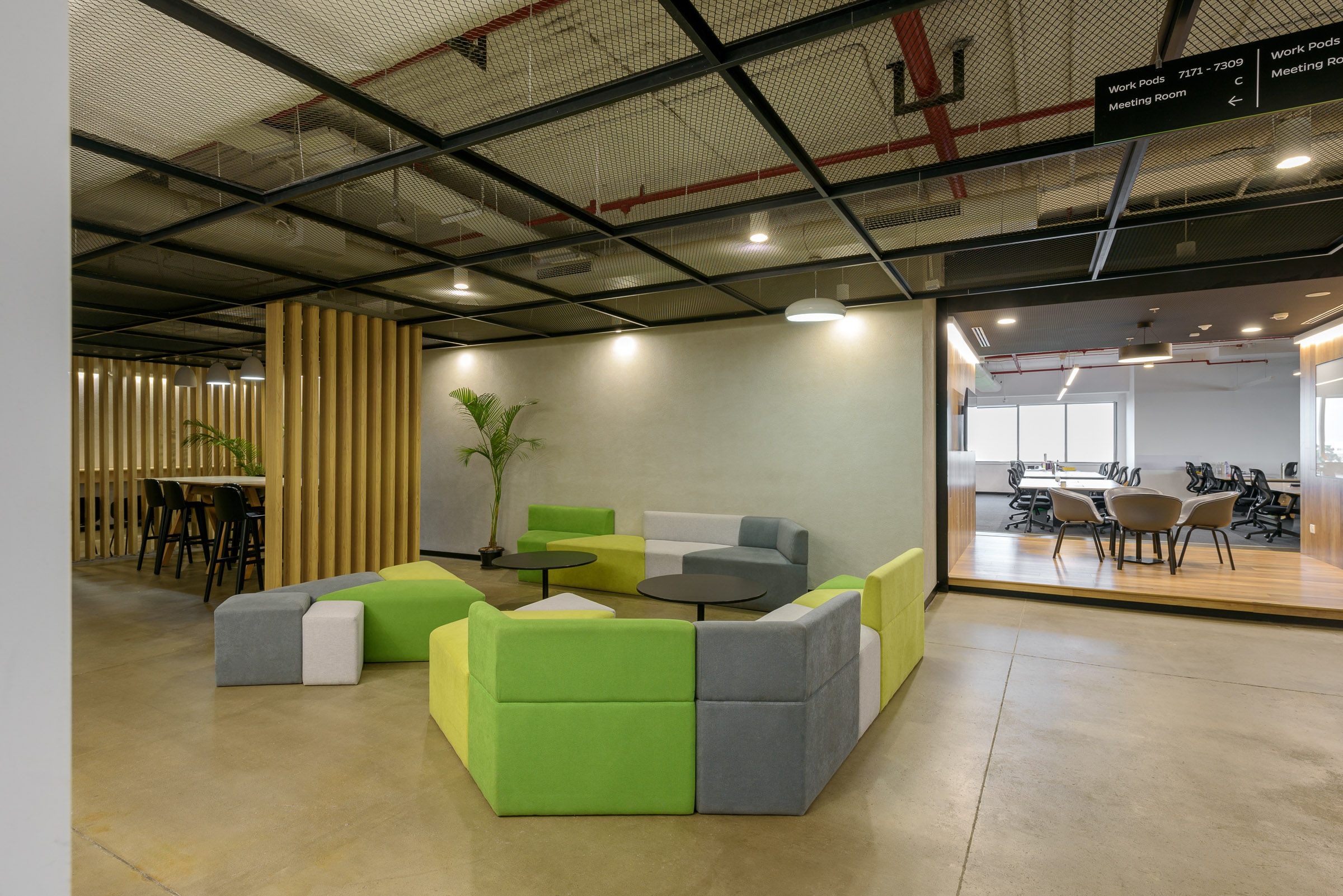
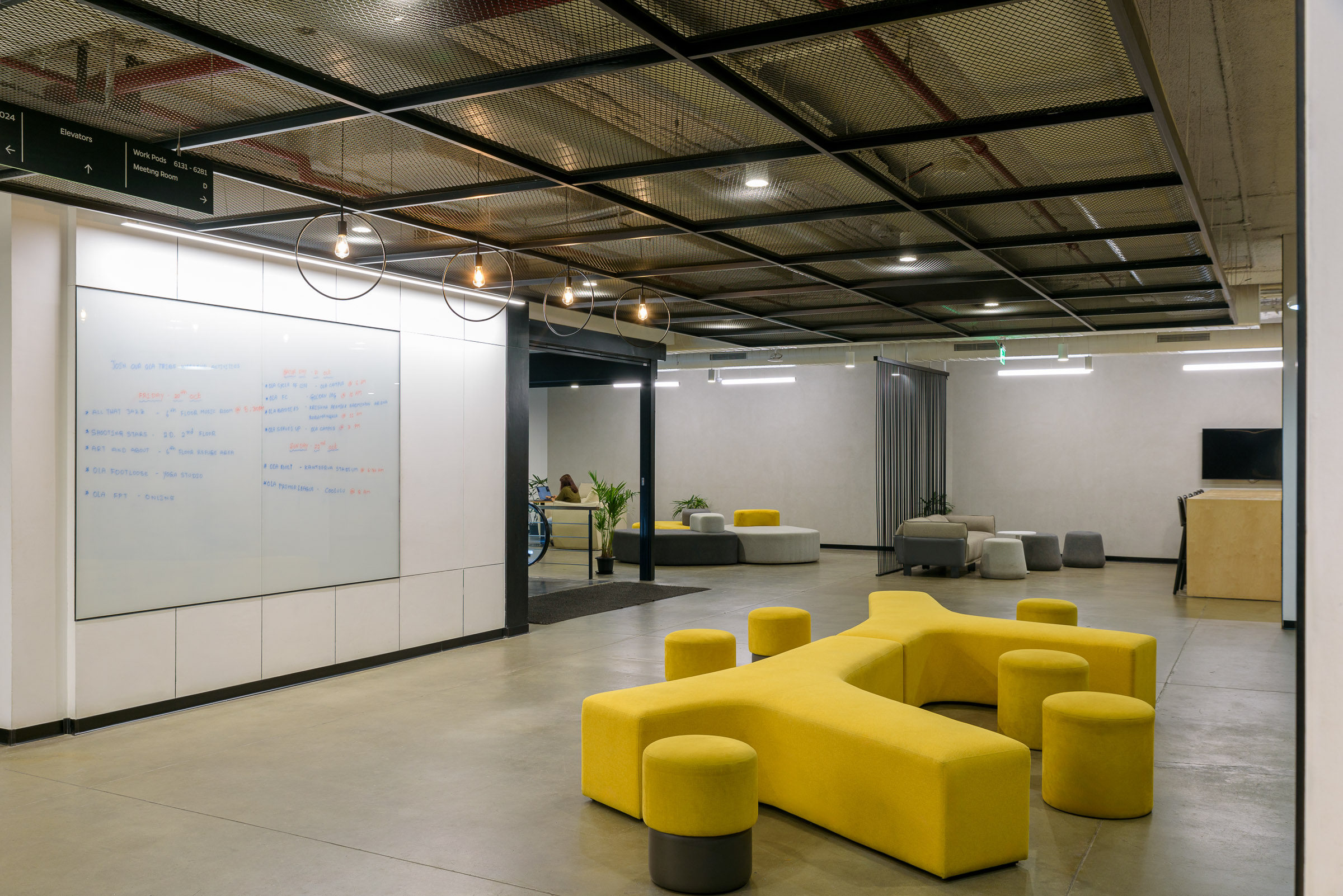
Collective and informal spaces are distributed across all floors to decentralise activity and reinforce a non-hierarchical workplace culture. These shared areas support everyday interaction as well as larger gatherings and events. Integrated planting introduces colour, softness and a sense of vitality throughout the building. Beyond Design supported the client throughout the project, from initial briefing and workplace strategy through concept and schematic design, technical design and construction, delivering a cohesive, carefully resolved workplace environment.