Ola Factory
The OLA Future Factory marks a significant step towards advancing India’s electric vehicle revolution, with ambitions and impact extending well beyond national boundaries. Conceived as a new model for large-scale, sustainable manufacturing, the project places environmental responsibility and long-term resilience at the core of its vision. Beyond Design was appointed as masterplanning architect and architectural lead, developing a comprehensive framework that integrates green technologies across design, manufacturing processes and product lifecycle. Sustainability is embedded as a fundamental design driver rather than an applied layer, shaping decisions around site planning, building orientation, material selection and environmental performance. The masterplan brings together industrial efficiency, spatial clarity and adaptability, establishing a future-facing industrial campus that reflects OLA’s commitment to innovation and a greener mobility ecosystem.
Size
7,30,000 sq. ft.
Location
Bargur, India
Status
Completed
Category
working
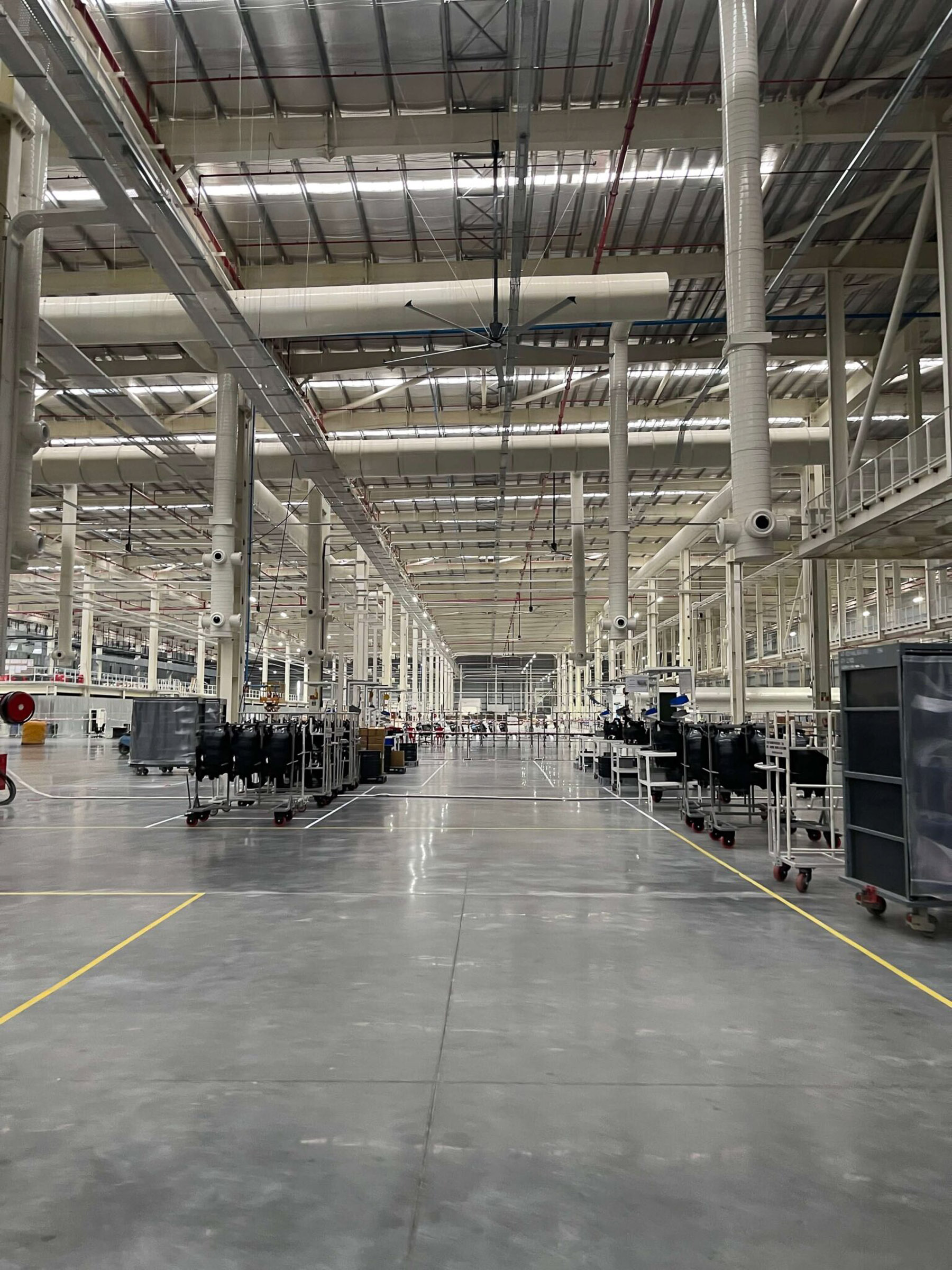
The OLA Future Factory redefines conventional industrial architecture through a vision of openness, sustainability and social responsibility. Conceived as a transparent and accessible manufacturing environment, the design allows visitors to engage directly with the EV production process through carefully choreographed circulation routes, viewing galleries and spatial sequences. This integration of visitor experience within a highly operational setting reinforces OLA’s commitment to technological leadership while allowing the architecture to communicate its purpose clearly and confidently.
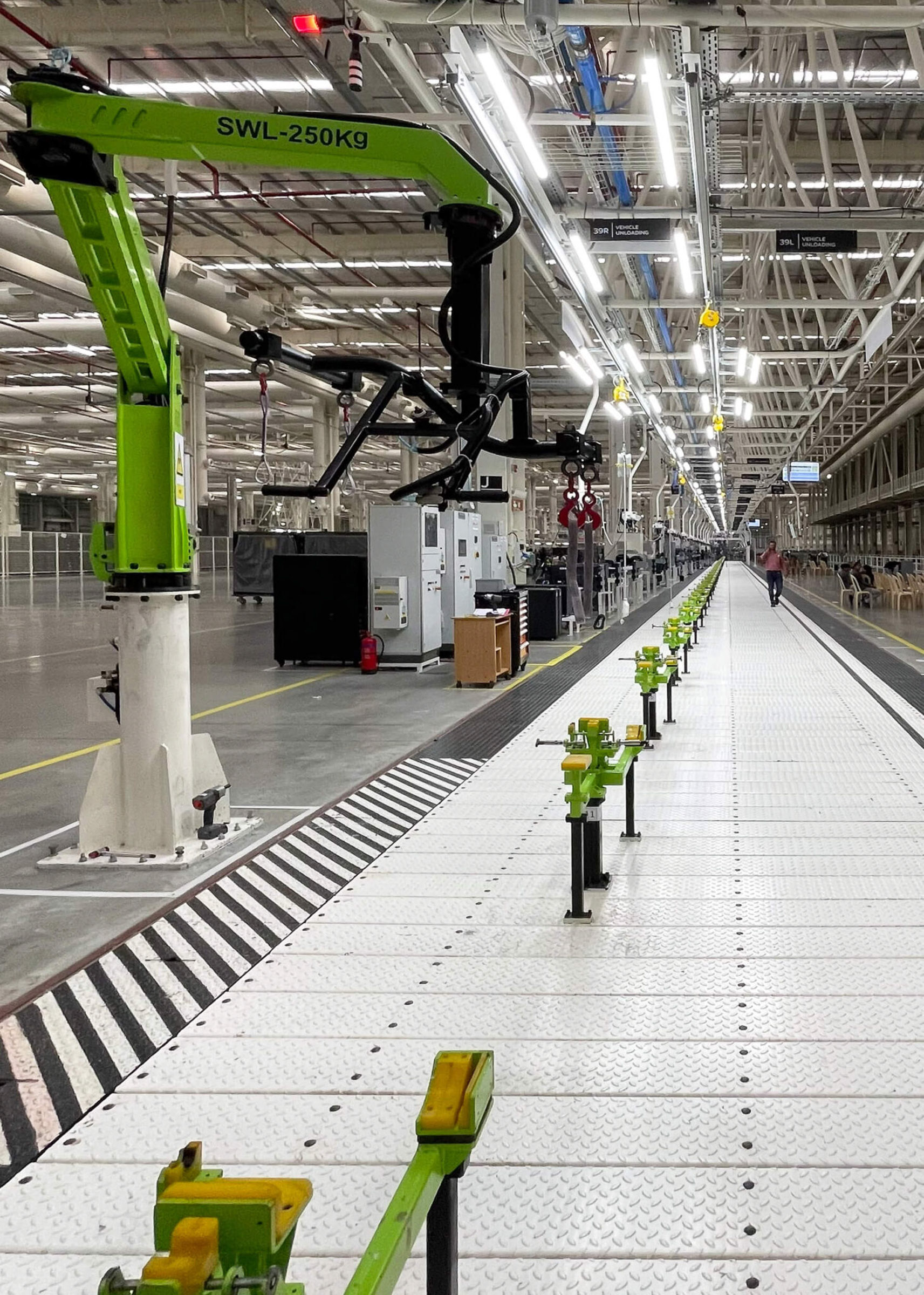
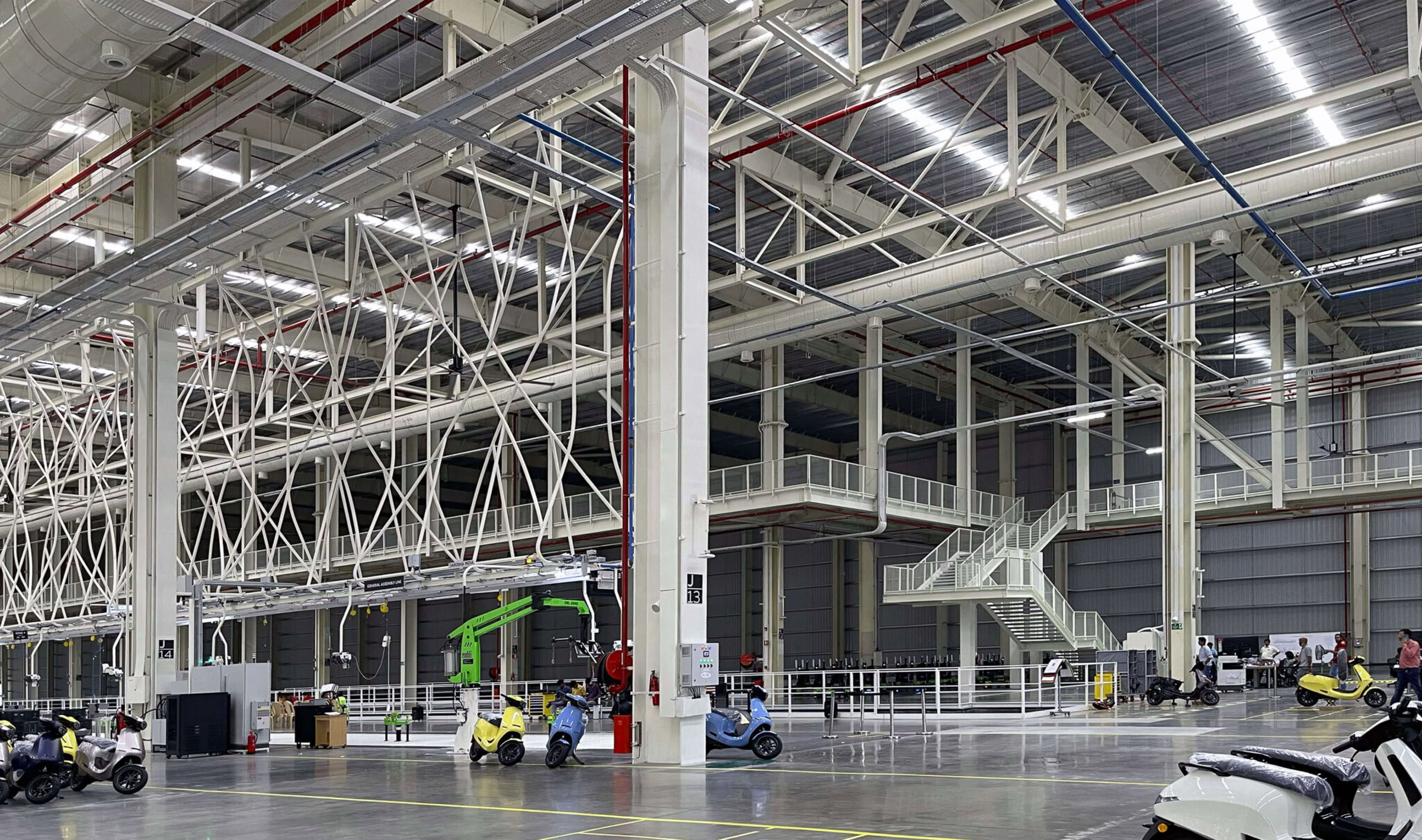
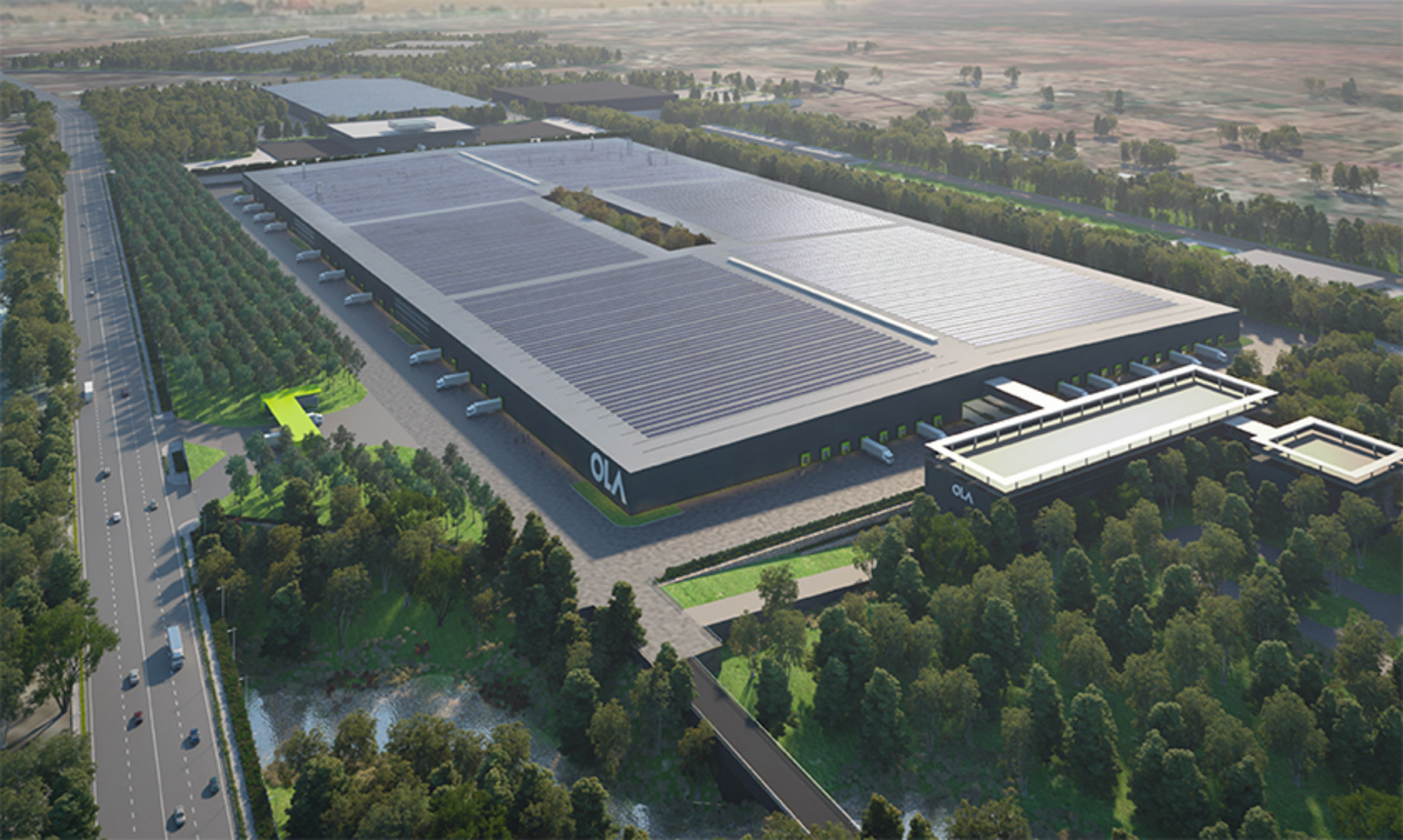
The masterplan is organised around a central mega-factory building, the Megablock, measuring 210,000 sqm and punctuated by a large internal courtyard. This unconventional insertion functions as a green lung within the industrial form, supporting environmental performance, natural light and ventilation, while contributing to a healthier and more productive working environment. Sustainability is embedded as a core design driver across the campus, shaping decisions from site planning and building orientation to materiality and spatial organisation.
The project holds particular significance through its support of a predominantly women workforce — the first of its kind within India’s EV manufacturing sector. This social ambition informed the architectural strategy, with a strong emphasis on clarity of movement, safety, comfort and inclusivity. From machinery layout and structure to interiors, signage and overall spatial character, the factory has been carefully designed and curated to balance functional efficiency with architectural expression. Through its role as masterplanning architect and architectural lead, Beyond Design delivered a cohesive, future-facing industrial campus that establishes a new benchmark for sustainable and socially responsible manufacturing.